The flash lasts two minutes. So why are you awake for forty?
Night sweats get talked about as a heat problem. For a lot of women the thing that actually ends the night is what happens to the pillow afterwards.
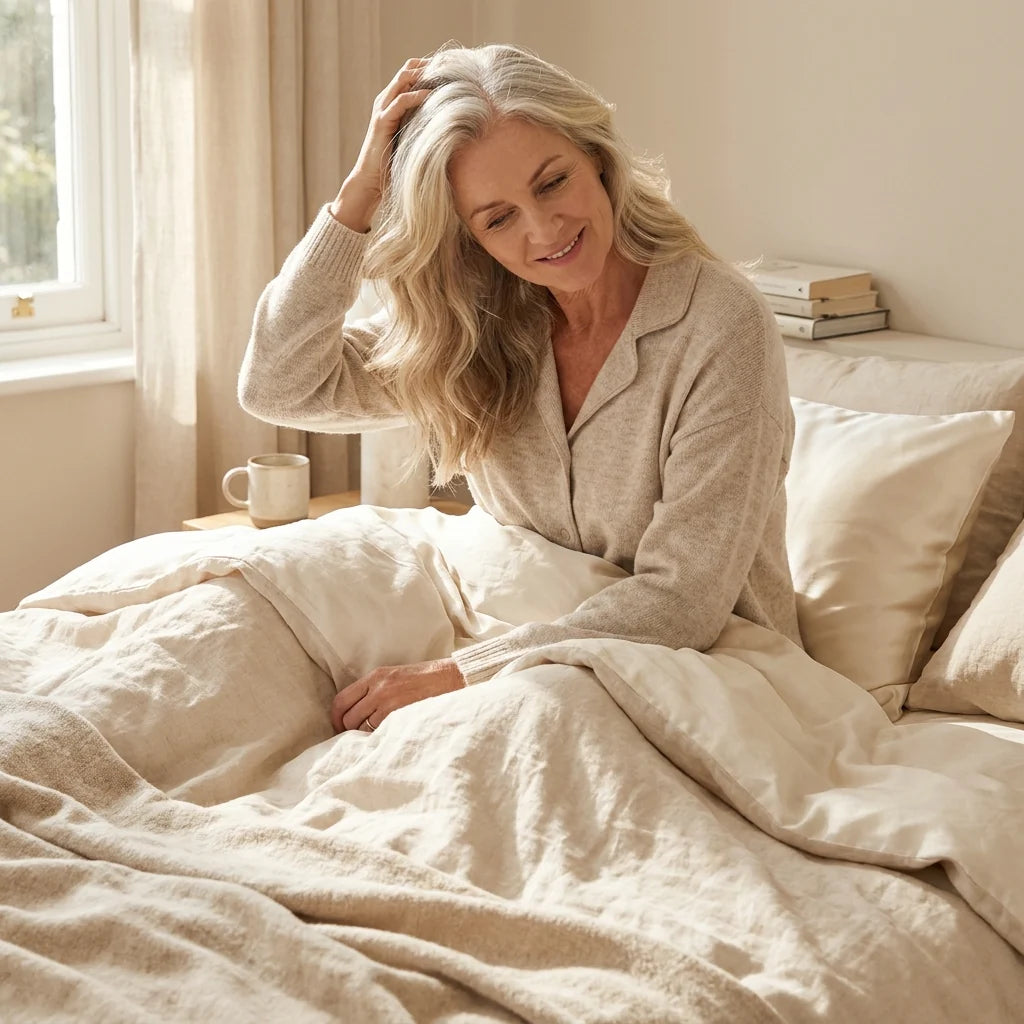
It is 3.14am, and you are properly awake. Not drifting — awake, eyes open, doing arithmetic on how many hours are left before the alarm.
The heat has already passed. That part took maybe two minutes. What is keeping you up now is the pillow: a cold, wet patch under your cheek that was warm and dry when you fell asleep.
So you flip it. The far side is cool for about ninety seconds. Then it isn't, and you are lying on your back in the dark deciding whether it is worth getting up to find a dry pillowcase, or whether you can just tough it out until it dries.
Most nights you tough it out. Some nights you get up.
If any of that is familiar, you are in extremely ordinary company — and you are also dealing with the part of perimenopause that almost nobody talks about in any useful detail. The public conversation stops at "hot flushes." It rarely gets as far as the bedding.
The flash is short. The wake-up isn't.
Here is the thing that took me an embarrassingly long time to notice, and that changed how I thought about the whole problem.
A hot flash is brief. The literature and most people's experience put the typical episode somewhere in the range of one to five minutes. If a flash were only a flash, you would half-wake, feel warm, and go straight back down.
That is not what happens. What happens is a chain:
The flash passes. The sweat stays. It has soaked into the pillowcase, which is now holding it against your face. As it evaporates you get cold, which wakes you further. Now you are turning the pillow over, then turning it back, then weighing up a trip to the airing cupboard. By the time you have settled, twenty or forty minutes have gone.
Do that three times a night and the sleep you have lost has almost nothing to do with the heat. It is all recovery time.
That reframing matters, because the flash itself is a physiological event and there is not much a bedroom can do about it. The recovery time is a different kind of problem. Some of it is behavioural. And a surprising amount of it is simply what your bedding is made of.
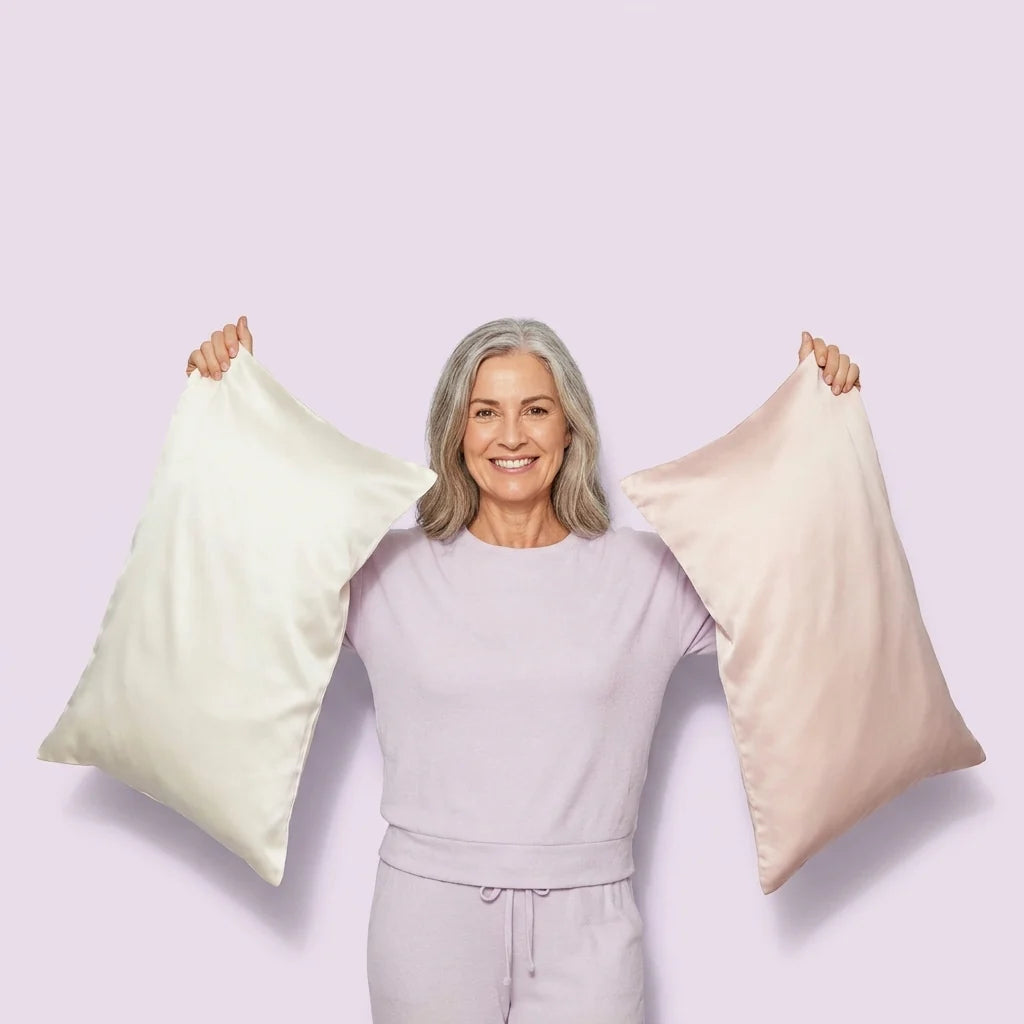
Cotton is very good at exactly the wrong thing
Cotton is an absorbent fibre. That is not a flaw, it is the entire point — it is why towels are cotton and why a cotton shirt feels comfortable on a warm day. The fibre is a hollow staple that draws water in and holds onto it.
Textiles have a standard measure for this called moisture regain: how much water a fibre holds at normal temperature and humidity, as a percentage of its dry weight. Cotton sits around 8.5%.
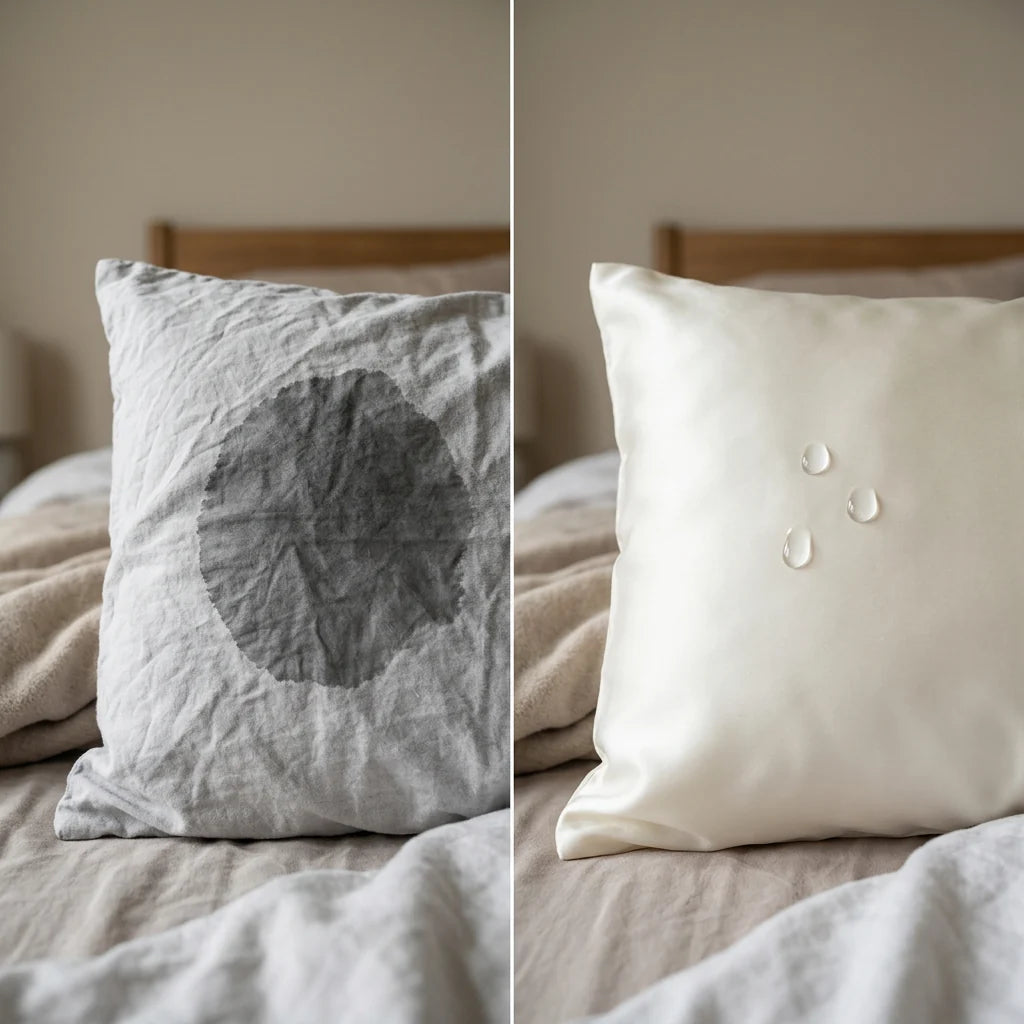
Silk's figure is actually a little higher — around 11% — which sounds like it should be worse. In practice it behaves very differently, because the number only tells you capacity, not behaviour. Silk is a smooth, continuous filament rather than a hollow absorbent staple. Liquid sits on the surface and evaporates off it instead of soaking in and being held there.
Put the same amount of water on both and you can see it without any instrumentation. The cotton takes it in and goes dark. The silk holds it on top in beads and is dry again in a fraction of the time.
Which is a fairly dull materials fact, until you are the one lying on it at 3am.
What the evidence actually supports
It is worth being precise about which parts of this are established and which are not, because the marketing in this category is not always careful.
- Night sweats are common in perimenopause and under-discussed. Vasomotor symptoms — flushes and night sweats — are among the most frequently reported perimenopausal symptoms, and sleep disruption is one of their main consequences.
- Cotton and silk hold moisture differently. Moisture regain is a standard textile measure: cotton sits around 8.5%, silk around 11%. The more relevant difference is structural — cotton is an absorbent hollow staple, silk a smooth continuous filament, so water behaves differently on each.
- Silk creates less friction against skin and hair. This is why it is a long-standing recommendation for hair breakage and why it shows up in dermatology advice for sensitive skin.
- None of that is a treatment for perimenopause. There is no trial showing a pillowcase reduces the frequency or severity of hot flashes, and we are not aware of anyone who has run one. The case here is about comfort and recovery time, not about symptoms.
Not all silk is the same silk
If you go looking, you will find silk pillowcases at £15 and at £120, both described as "luxury mulberry silk." The difference is mostly one number that the cheap ones tend not to print.
Momme — pronounced "mommy" — is the density measure for silk. It tells you how much silk is actually in the fabric. Most pillowcases sold as luxury silk are 19 momme. That is thin enough that it starts to look tired after a season, and thin enough that you can often see the pillow through it.
The weight most people find worth having is 22 momme. It is heavier in the hand, opaque, drapes properly, and it survives washing — which matters more than usual here, because if you are sweating at night you are washing bedding more often than you used to.
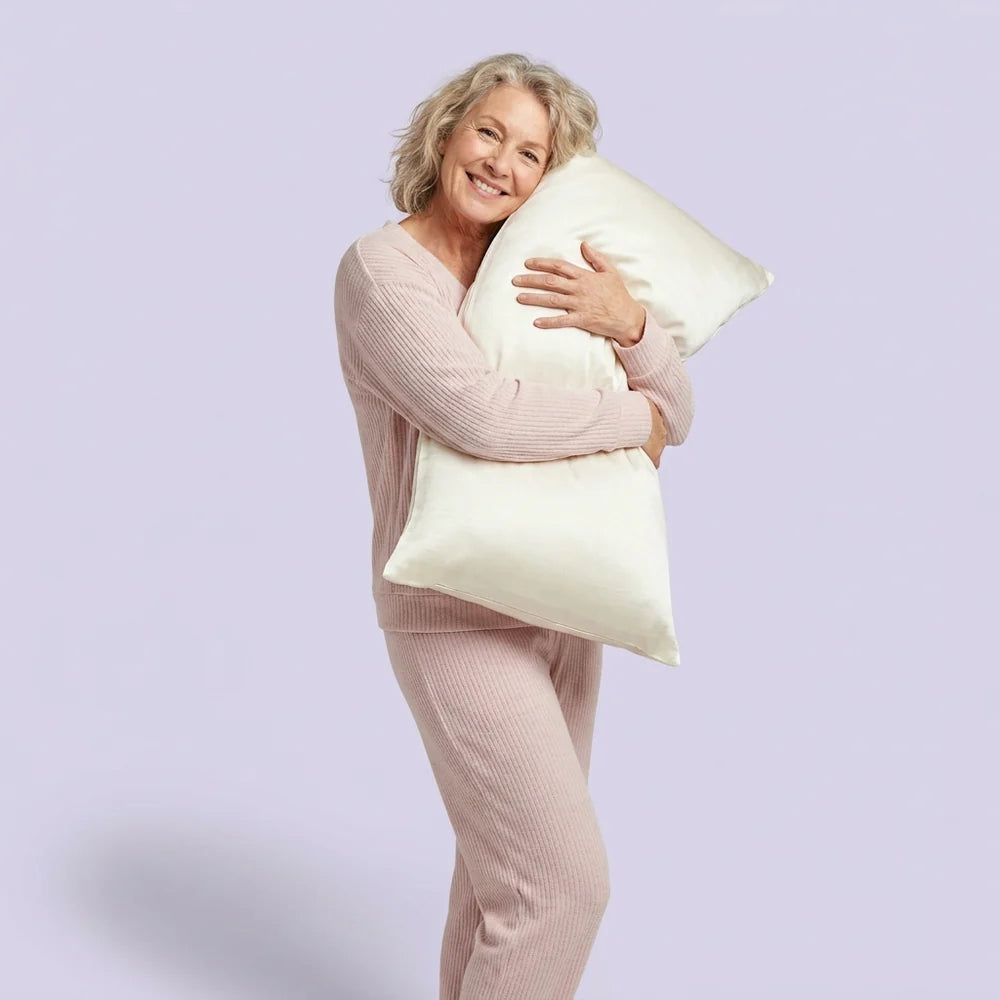
That is the weight Lunelle makes, and it is the reason the price sits where it does rather than at the £15 end.
What people actually report
The pattern in the feedback is consistent, and it is narrower than the marketing for this category usually implies. Nobody says the flashes stopped. What they say is that the aftermath got shorter.
Individual experience varies a lot here, and it is worth saying that plainly. Some people notice the difference the first night. Some notice it in the second week, when they realise they have not stripped the bed at 3am in a while. Some do not find it makes much odds at all.
Worth trying?
Perimenopause is not a bedding problem and this article is not going to pretend it is. The flashes need a proper conversation with someone qualified.
But the gap between a two-minute flash and a forty-minute wake-up is largely about what your pillow does with the sweat — and that part is just a question of what the thing is woven from. It is one of the few bits of this whole experience with a genuinely simple answer.
Lunelle sells a 22-momme, Grade 6A mulberry silk pillowcase with a hidden zip and French seams, OEKO-TEX certified, machine washable on a cold cycle. You can look at it here — and there is a 30-night trial, which for something like this seems like the only fair way to sell it. If it makes no difference to your nights, you get your money back and you keep the pillowcase, because nobody wants used bedding returned.
30-night trial · keep it if it doesn't help · free returns
Sleep well,
The Lunelle Team
One last thing. If you are waking several times a night, running hot, and quietly filing it under stress or bad sleep hygiene — night sweats in your forties and fifties are worth mentioning to a doctor whatever you decide about bedding. It is very treatable, and an awful lot of people spend years assuming it is just something to get through.